

The knee is the hardest working joint in the body, and for many people in Kochi it is also the first to complain. Whether you are a senior finding stairs difficult, a runner with a nagging ache below the kneecap, or someone told that a knee replacement may be in your future, there is good news: most knee pain responds extremely well to physiotherapy, and for many people surgery can be delayed or avoided altogether.
This guide walks through what actually causes knee pain, why the common advice to simply rest often backfires, and what the evidence really says about exercise therapy compared with surgery.
Common Causes of Knee Pain
Osteoarthritis
The most common cause after the age of fifty. The joint cartilage gradually wears, causing pain, stiffness and swelling, typically worse after long periods of sitting or first thing in the morning. Importantly, the amount of wear seen on a scan often does not match the amount of pain a person feels, which is why strengthening the surrounding muscles can help so much even when the X-ray looks worrying.
Runner's knee
Pain around or behind the kneecap, common in runners, walkers and gym goers. It usually stems from weakness in the hip and thigh muscles rather than damage inside the joint, which is exactly why it responds so well to targeted strengthening.
Ligament and meniscus injuries
Twisting injuries during sport, a slip on a wet floor or a road accident can strain or tear the knee's ligaments and cartilage, leaving the joint painful, swollen or unstable. Many of these injuries recover well with guided rehabilitation rather than surgery.
Excess body weight
Every extra kilogram of body weight adds roughly four kilograms of load through the knee when walking or climbing stairs. Weight is one of the most powerful and most treatable drivers of knee pain, and even a modest reduction can noticeably ease symptoms.
The Myth of Rest
The most damaging advice a painful knee can receive is complete rest. Cartilage has no direct blood supply; it is nourished by movement. When you stop moving, the muscles that protect the knee weaken within weeks, the joint stiffens, and the pain usually worsens once activity resumes. Short rest after an acute injury makes sense, but beyond that, the treatment for a painful knee is intelligent movement, not avoidance of it.
Cartilage is fed by movement. A knee that stops moving does not heal, it stiffens and weakens.
Exercise Therapy Rivals Surgery for Many Knees
This is not opinion. Large clinical trials have repeatedly shown that structured exercise therapy produces outcomes comparable to keyhole surgery for degenerative meniscus tears, and that supervised strengthening programmes significantly reduce pain and improve function in knee osteoarthritis. International guidelines now recommend exercise therapy as the first-line treatment for knee arthritis, before injections or surgery are considered.
Surgery or Physiotherapy First?
| Situation | Usual first step | Why |
|---|---|---|
| Knee osteoarthritis | Physiotherapy & exercise | Recommended first-line care that often delays or avoids surgery |
| Runner's knee / kneecap pain | Physiotherapy | Driven by muscle weakness, not joint damage |
| Degenerative meniscus tear | Physiotherapy | Outcomes comparable to keyhole surgery in trials |
| Locked knee or major instability | Surgical opinion | May need repair, with physiotherapy before and after |
| Advanced arthritis, quality of life gone | Discuss replacement | Pre-surgery strengthening improves recovery |
What a Knee Physiotherapy Programme Looks Like
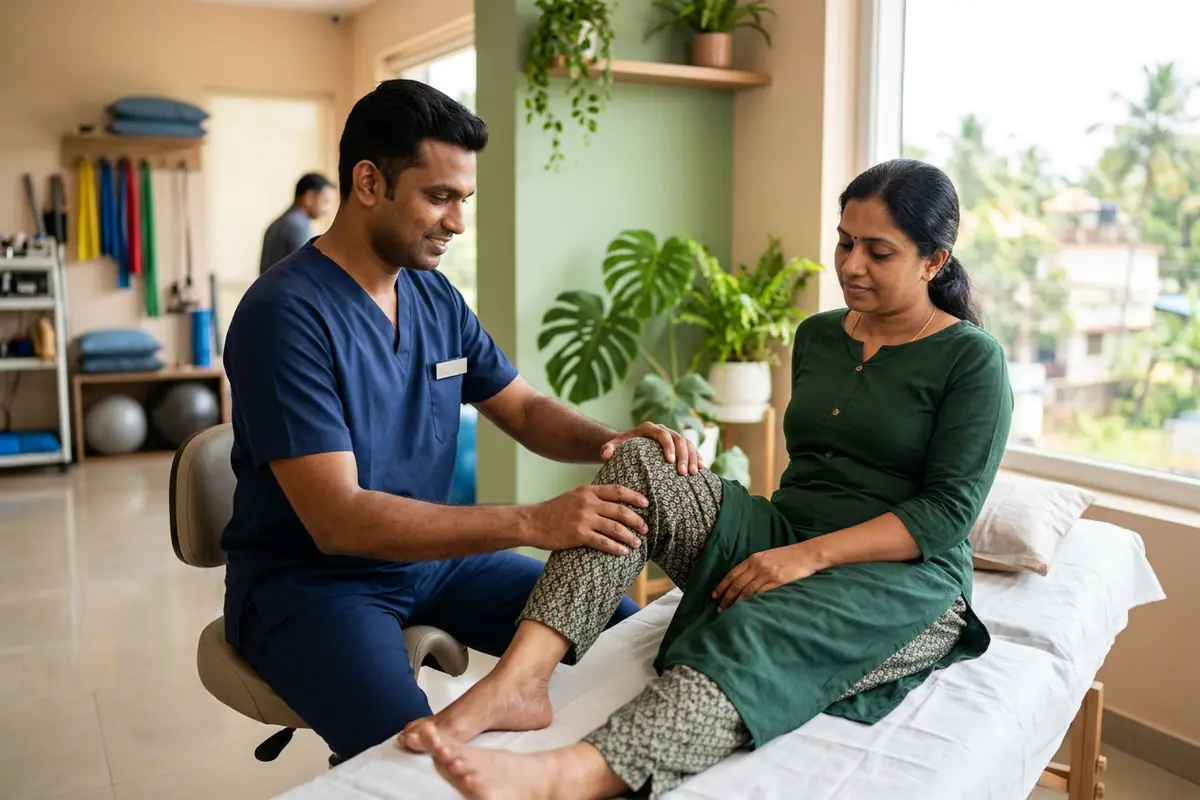
- Assessment: we examine your knee, hip, ankle, walking pattern and strength to find the true source of the pain, which is often above or below the knee itself.
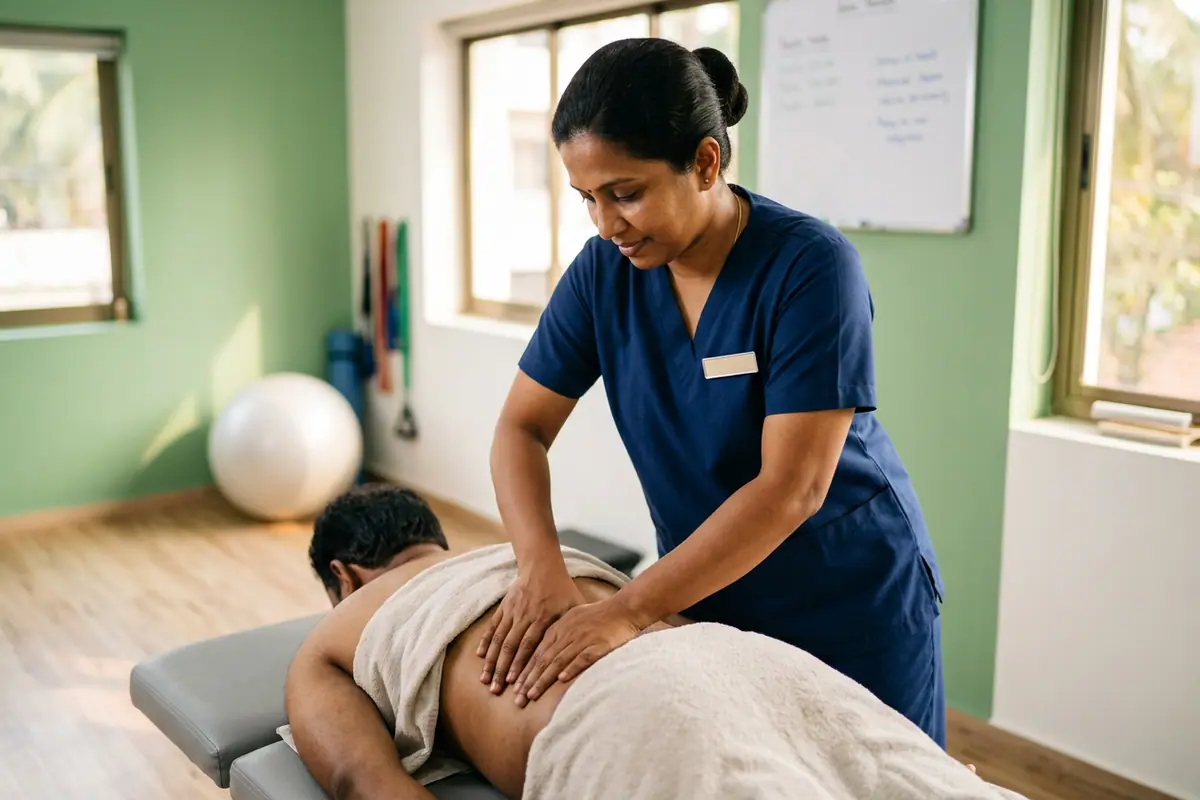
- Pain control: manual therapy, taping and activity modification settle the irritated joint so exercise becomes comfortable.
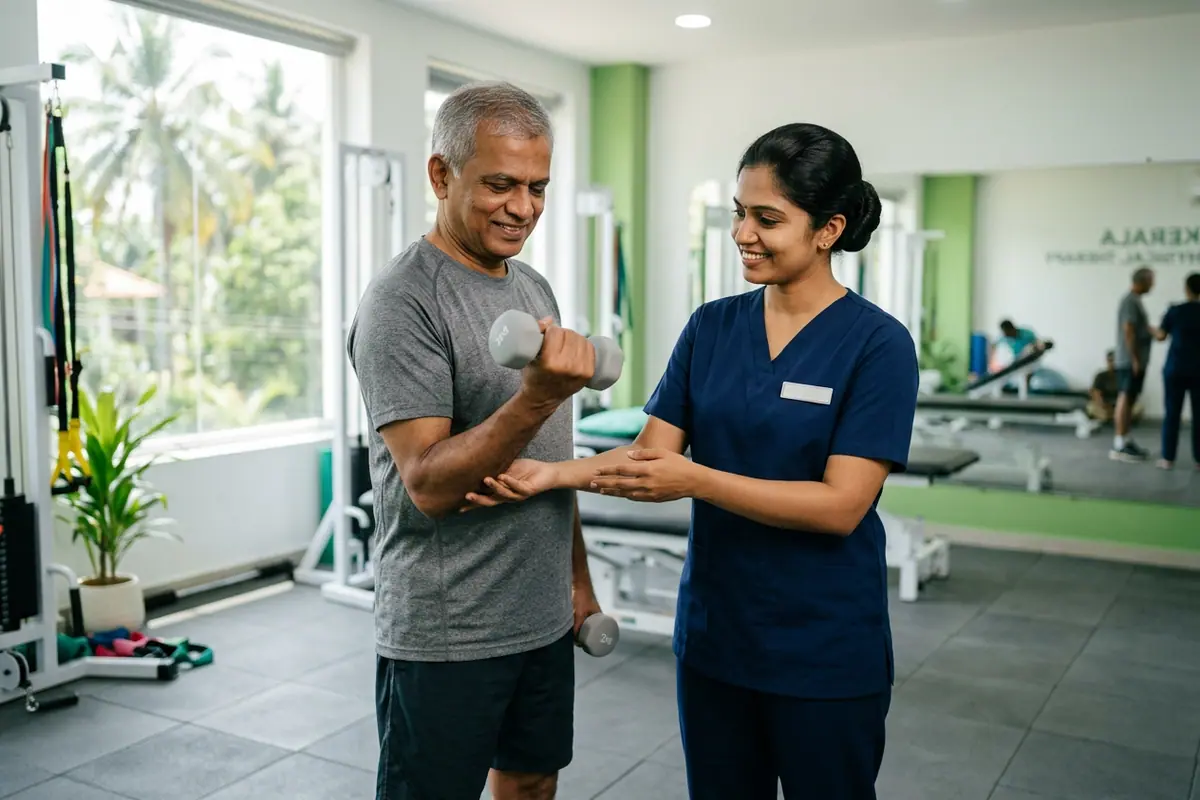
- Progressive strengthening: graded exercises for the thigh, hip and calf rebuild the muscular support your knee depends on.
- Balance and movement retraining: we correct the squatting, stair-climbing and walking habits that keep overloading the joint.
- Long-term plan: a simple home routine, weight management guidance and activity advice keep the results permanent.
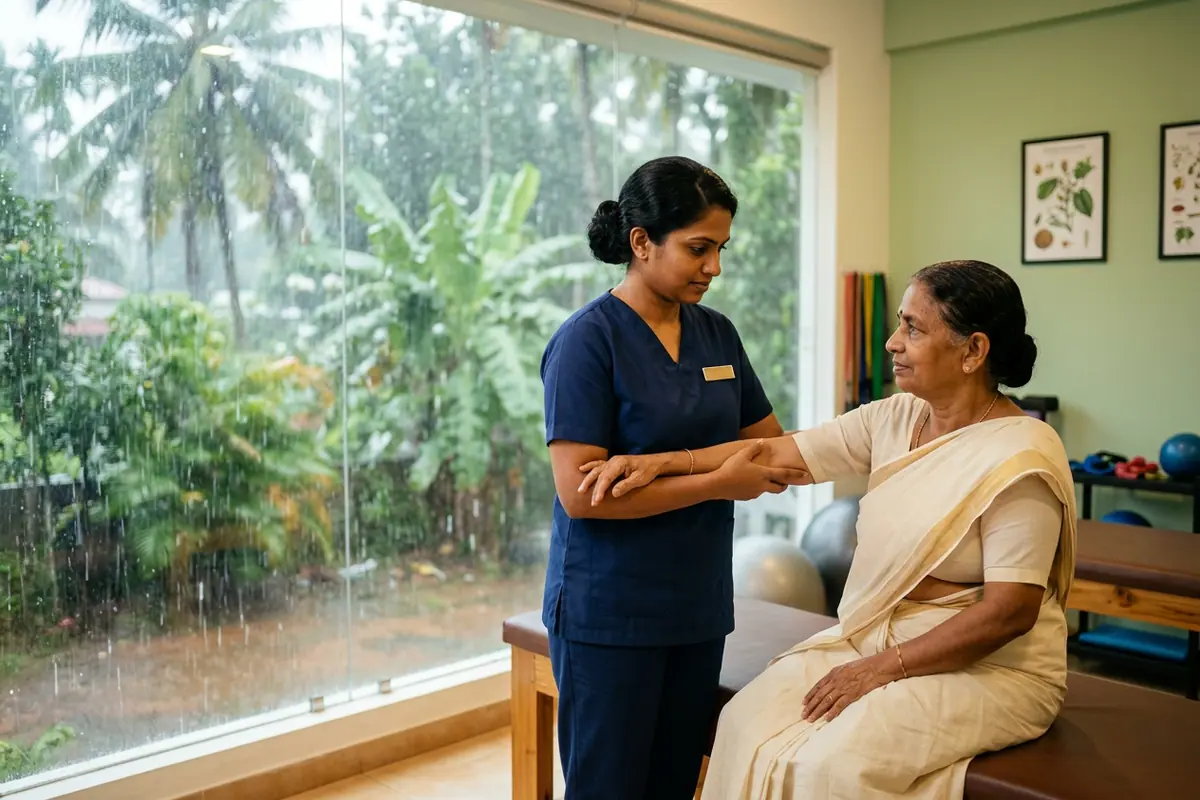
At our Kakkanad clinic, knee pain treatment is delivered through our musculoskeletal and sports physiotherapy programmes, while older adults with arthritis benefit from our dedicated geriatric physiotherapy service, available at the clinic or at home.
Preventing Knee Pain Before It Starts
Keep your thigh and hip muscles strong with twice-weekly strength work, maintain a healthy body weight, build up running or trekking distances gradually, and never ignore a knee that swells repeatedly. Small habits protect the joint for decades. If your work or hobbies involve a lot of kneeling, squatting or stairs, a little preventative strengthening goes a long way.
Take the First Step, Literally
If knee pain is shrinking your world, do not wait for it to decide your future. Expert knee physiotherapy in Kakkanad can relieve pain, rebuild strength and, for many people across Kerala, keep the operating theatre off the agenda entirely.
Frequently Asked Questions
Can physiotherapy really help me avoid knee surgery?
For many people, yes. Exercise therapy is the recommended first-line treatment for knee arthritis and works well for runner's knee and many meniscus problems. It often delays or avoids surgery, and even prepares you for a better recovery if you do eventually need it.
My knee X-ray shows arthritis. Is exercise safe?
Yes, and it is one of the best things you can do. The degree of wear on a scan does not reliably predict pain. Correctly graded, supervised exercise reduces pain and improves function without harming the joint.
Should I rest a painful knee?
Only briefly after an acute injury. Beyond that, complete rest weakens the protective muscles and stiffens the joint, usually making pain worse. Intelligent, guided movement is the treatment, not avoidance.
How long before I feel a difference?
Many people notice less pain within a few weeks of starting a structured programme, with strength and function continuing to build over the following months. After your assessment we will give you a realistic timeline.
Book a Knee Assessment in Kakkanad
Personalised, evidence based knee pain treatment with Dr. Noora and the Proud Physio team. Open every day, 8:00 AM to 10:00 PM.
Call +91 80894 14419 Book Online