Many people assume that getting weaker is simply part of growing older, something to be accepted rather than acted upon. In truth, a large share of the weakness, tiredness and unsteadiness that appears after 60 is not ageing itself but muscle that has quietly faded away. The encouraging news is that this process can be slowed, halted and even reversed, at almost any age.
From around the age of 50, adults lose muscle steadily unless they train, a process known as sarcopenia. Left unchecked, it leads to weakness, fatigue and a wobble in the legs that makes stairs, shopping and standing up harder than they should be. Resistance training is the single most reliable way to fight back.
Why Muscle Fades After 50
Muscle is a living tissue that responds to demand. When daily life stops asking much of your legs, arms and core, the body sheds what it no longer seems to need. This is sarcopenia, and it happens steadily from around 50 unless you actively train against it. The result is not just smaller muscles but real functional loss: less strength to rise from a chair, less stamina through the day, and less stability on your feet.
Resistance and strength training is well established as a way to counter this muscle loss and the frailty that follows, improving strength and function at any age. Crucially, the body does not lose its ability to respond. Even people in their 80s and 90s build measurable strength when they train sensibly.
The weakness people blame on age is often just unused muscle. Ask it to work again, and it answers, even in your ninth decade.
Strength Training and Fewer Falls
Falls are one of the biggest threats to independence in later life, and strength sits at the heart of preventing them. A 2019 Cochrane review found that exercise which challenges balance and includes strength work reduces the rate of falls in older people by about 23%, and the number of people who fall by about 15%. Higher-dose, balance-challenging programmes worked best.
The reason is simple. Stronger legs and a stronger core give you the power to catch yourself when you stumble, and better balance means you stumble less in the first place. This is exactly why our geriatric physiotherapy plans pair strengthening with balance training rather than treating them separately.
What Safe Strength Training Looks Like
| Goal | What it involves | Why it helps |
|---|---|---|
| Leg strength | Sit-to-stands, gentle squats, step-ups | Easier standing, walking and stairs |
| Balance | Standing on one leg, heel-to-toe walking | Fewer stumbles and steadier turns |
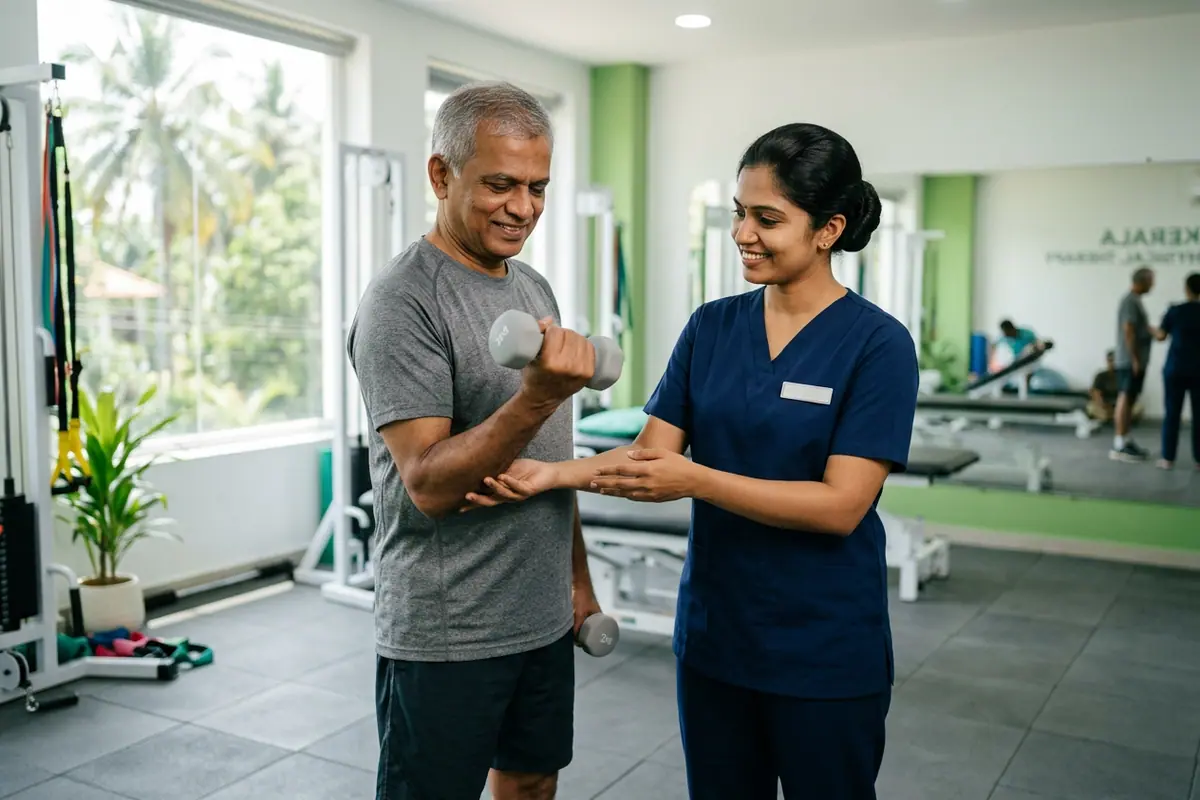
| Upper body | Resistance bands, light weights | Carrying, reaching and pushing up from a chair |
| Core | Trunk and posture exercises | Stability and confident movement |
Sessions should start where you are, progress gradually, and be guided by someone who can spot the right technique. This is not about heavy gym lifting; it is about steady, well-judged effort that your body can build on week by week.
It Is Never Too Late to Start
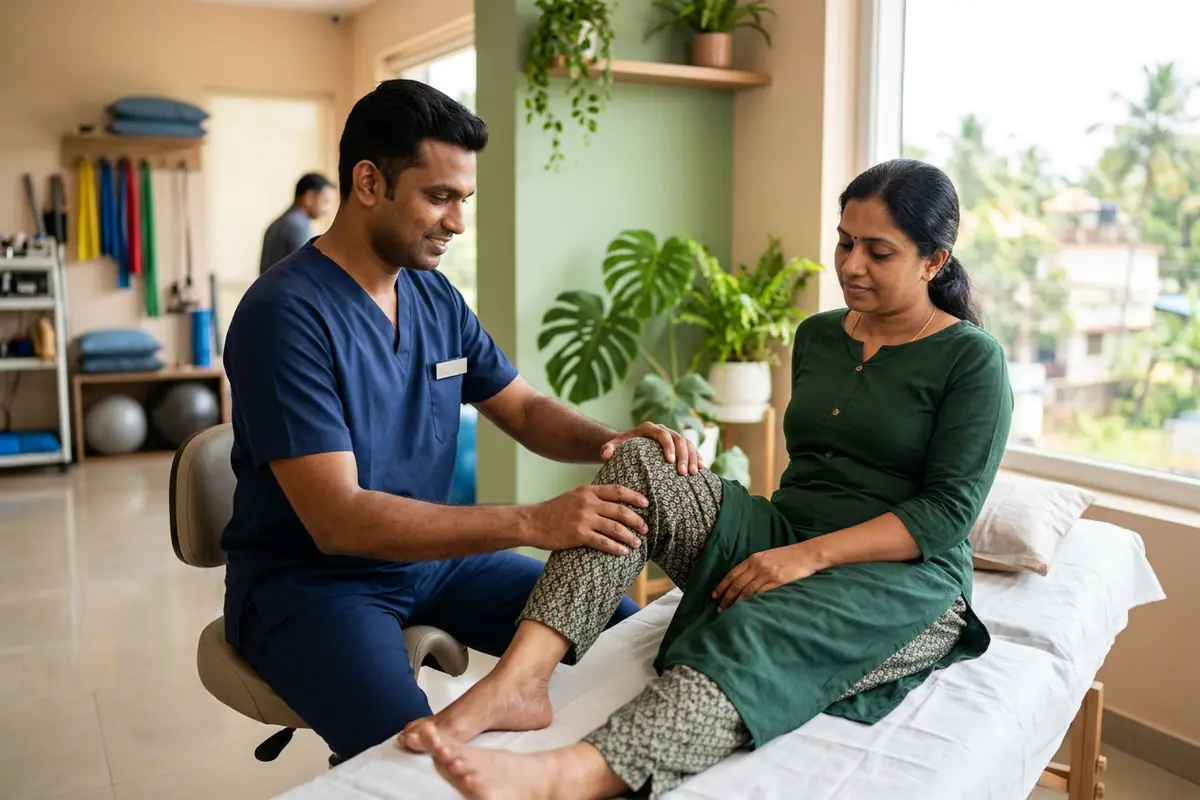
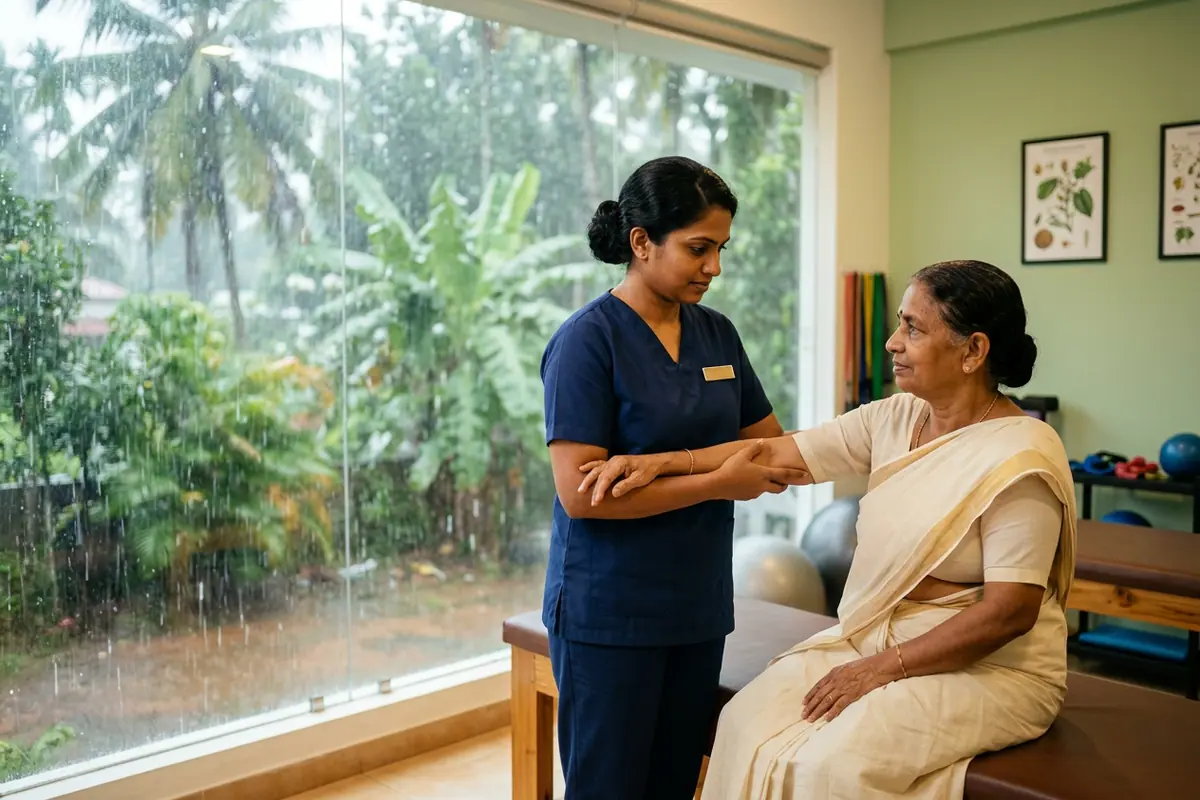
Perhaps the most important message is this: you have not missed the window. Whether you are 60, 75 or 90, muscle responds to training. Beginning now can mean walking further, sleeping better, falling less and staying in your own home for longer. For those who find travel difficult, our physiotherapy team can guide safe strength work in the clinic or at home across Kochi and Ernakulam.
Frequently Asked Questions
Is strength training safe at 70 or 80?
Yes, when it is guided and progressed sensibly. Resistance training improves strength and function at any age, and even people in their 80s and 90s build measurable strength. A physiotherapist tailors the load and pace to your health and starting point.
Can exercise really reduce my risk of falling?
It can. A 2019 Cochrane review found that exercise which challenges balance and includes strength work reduces the rate of falls in older people by about 23% and the number of people who fall by about 15%, with higher-dose, balance-challenging programmes working best.
I have knee pain. Can I still strengthen my legs?
Very often, yes. Exercises can be adapted around sore joints, and building the muscles that support the knee frequently eases pain over time. We assess first and design a programme that respects your symptoms.
Do I need a gym or special equipment?
No. Effective strength work for older adults uses body weight, a sturdy chair and resistance bands, all of which suit home practice. Our team can set this up for you and adjust it as you get stronger.
Build Strength, Stay Steady, Stay Independent
Book a strength and balance assessment with Dr. Noora at Proud Physio & Wellness. Clinic or home visits across Kochi.
Call +91 80894 14419 Book Online