
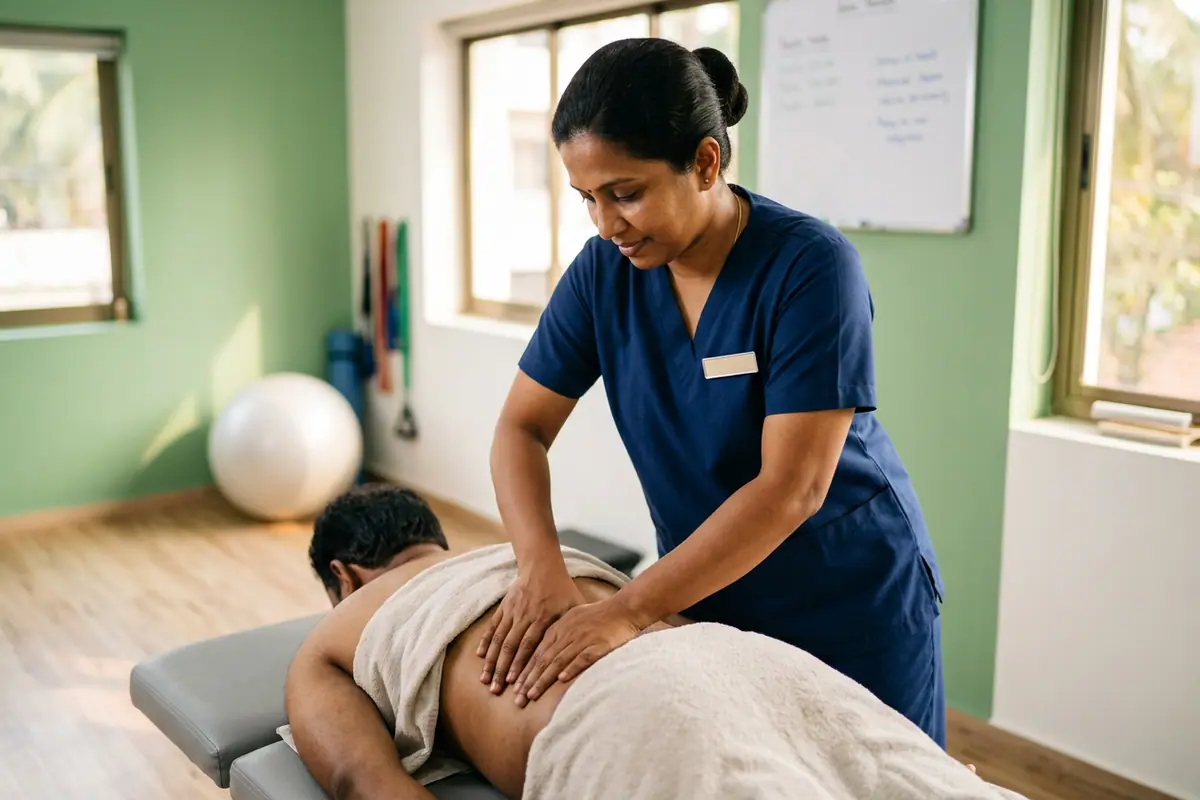
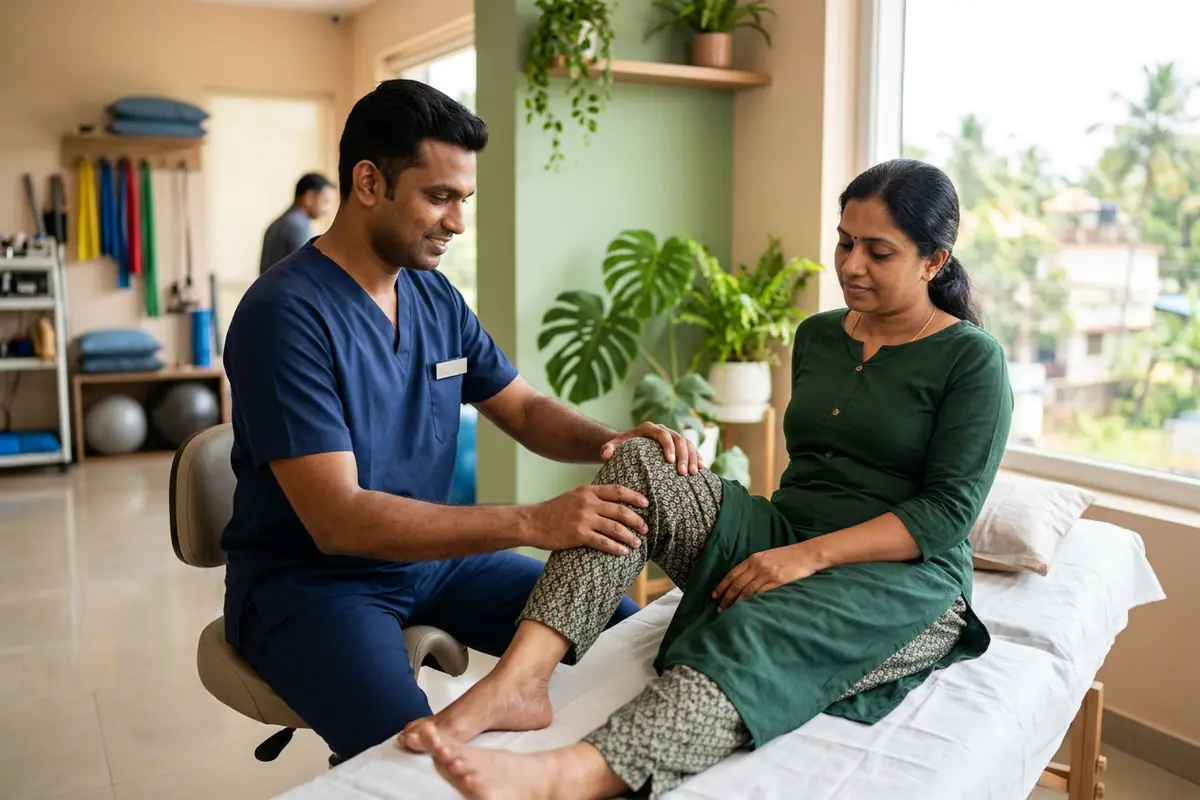




A twisted ankle is one of the most common injuries we see, and one of the most underestimated. It usually happens in a split second: a missed step off a kerb, a foot that rolls on uneven ground, a landing that goes wrong on the sports field. The pain is sharp, the ankle swells quickly, and within a day walking can be difficult. Most people assume it will simply settle on its own, and while the swelling often does fade, the deeper problem frequently does not.
At Proud Physio & Wellness, led by Dr. Noora Ameen TA (PT), we treat ankle sprains properly, addressing not just the immediate pain and swelling but the weakness and instability that so often lead to the same ankle giving way again and again.
What Is an Ankle Sprain?
An ankle sprain is an injury to the ligaments, the tough bands of tissue that hold the ankle bones together and keep the joint stable. When the foot rolls or twists beyond its normal range, these ligaments are stretched or torn. The most common type is a lateral sprain, where the ankle rolls inwards and damages the ligaments on the outer side. Sprains are usually graded by severity:
The grade guides how we plan your rehabilitation, but even a mild sprain deserves proper care. It is not the size of the tear alone that predicts recurrence, but how well strength, movement and balance are restored afterwards.
Why Recurrent Ankle Sprains Happen
The reason so many people sprain the same ankle repeatedly is that the injury does more than damage a ligament. It disrupts the tiny position sensors within the joint and surrounding muscles that tell your brain exactly where your foot is and how it is moving. This sense is called proprioception. When it is impaired, your ankle reacts too slowly on uneven ground, so it rolls again before the muscles can protect it. Add the muscle weakness that follows a period of limping and rest, and you have an ankle that feels unreliable and sprains easily.
A sprain that never gets rehabilitated does not heal stronger, it heals weaker. That is why the second sprain is so often easier than the first.
This is where proper physiotherapy makes all the difference. Our musculoskeletal and sports physiotherapy restores the strength, control and balance the ankle needs, while our recurrence management approach focuses on breaking the cycle of repeat sprains for good.
How Physiotherapy Helps an Ankle Sprain
Good ankle rehabilitation moves through clear stages. In the early days we calm the pain and swelling and protect the healing ligament while keeping you moving safely. As the ankle settles, we restore full movement, then rebuild the strength of the muscles that support and steer the joint. The crucial final phase is balance and proprioception retraining, where we teach your ankle to react quickly and correctly again, so it can handle uneven surfaces, quick turns and, if you are an athlete, the demands of sport.
Our Approach at Proud Physio
Assessment & grading
We examine the ankle, check the ligaments and joint stability, rule out the need for imaging where appropriate, and establish how severe the sprain is and what caused it.
Pain, swelling & early movement
We reduce swelling and pain with hands-on techniques and guided early loading, protecting the ligament while avoiding the stiffness that comes from complete rest.
Strength & balance retraining
We rebuild the calf and foot muscles and progress you through targeted balance and proprioception work, the single most important step in preventing recurrence.
Return to activity & prevention
We reintroduce walking, running, turning and sport-specific movement in stages, and give you a simple home routine to keep the ankle strong and stable.
A Typical Rehabilitation Pathway
| Phase | Focus | Typical goals |
|---|---|---|
| Acute | Protect & settle | Reduce swelling and pain, safe weight bearing, gentle movement |
| Recovery | Movement & strength | Full range of motion, calf and foot strengthening |
| Balance | Proprioception | Single-leg balance, control on uneven surfaces, quick reactions |
| Return | Function & prevention | Running, turning, sport drills, a lasting home programme |
Frequently Asked Questions
Do I really need physiotherapy for a simple ankle sprain?
Even mild sprains benefit from proper rehabilitation. Swelling settling does not mean the ankle is strong or stable again. Physiotherapy restores the strength and balance that prevent the sprain from returning, which is the most common problem we see with untreated ankles.
How long does an ankle sprain take to heal?
A mild sprain often eases within two to three weeks, while more severe sprains take longer. Full recovery of strength and balance usually takes a little longer still. After assessing your ankle we give you a realistic timeline and clear goals for each stage.
Why does my ankle keep giving way?
Repeated giving way is usually a sign of lingering weakness and reduced proprioception from a previous sprain that was not fully rehabilitated. This is very treatable. Balance retraining and targeted strengthening can rebuild the stability your ankle has lost.
Should I rest completely or keep moving?
Complete rest for long periods usually causes stiffness and weakness. We protect the healing ligament in the early days but guide you into safe, gradual movement and loading, which helps the ankle recover faster and stronger.
When can I return to sport after an ankle sprain?
Return to sport depends on the grade of sprain and how well strength and balance return. We progress you through sport-specific movement in stages and clear you to return only when the ankle can handle the demands safely, reducing the risk of another sprain.
Get Your Ankle Assessed Properly
Book an ankle sprain assessment with Dr. Noora at our clinic, or arrange a home visit at your convenience.
Call +91 80894 14419 Visit the Clinic