

If you have noticed a gap, a bulge or a soft doming down the middle of your tummy after having a baby, you are not alone, and it is not simply a matter of stubborn weight. This is often diastasis recti, a separation of the abdominal muscles that is very common during and after pregnancy. It can be worrying to look at and frustrating to live with, but with the right, gentle physiotherapy it usually responds well.
At Proud Physio & Wellness, care is led by Dr. Noora Ameen TA (PT), a female physiotherapist, so you can be assessed and guided in a private, comfortable and respectful setting. We help you understand exactly what is happening in your body and rebuild your core safely, at a pace that suits your recovery.
What Is Diastasis Recti?
Diastasis recti is a widening or separation of the two bands of the rectus abdominis, the long muscles that run down the front of your tummy. During pregnancy, as the baby grows, the connective tissue along the midline (the linea alba) stretches and softens to make room. For many women this gap narrows on its own in the months after birth, but for some it remains, leaving the core feeling weak and unsupported.
It is important to know this is not a sign of failure or of doing something wrong. It is a normal response to pregnancy. What matters is how the core is rebuilt afterwards, and this is where guided physiotherapy makes a real difference.
Signs of Diastasis Recti
The separation can affect more than appearance. Women often notice:
How to Check for Diastasis Recti
You can do a gentle self-check at home. Lie on your back with your knees bent and feet flat. Place your fingers just above your belly button, then slowly lift your head and shoulders a little. If you feel a soft gap or your fingers sink between the muscles, you may have some separation. A self-check is only a guide, though. A proper physiotherapy assessment measures the width and depth of the gap and, just as importantly, checks how well the deep core is working, so your programme can be built correctly.
How Physiotherapy Helps
Rebuilding the core after diastasis recti is not about crunches or hard abdominal workouts. In fact, the wrong exercises done too soon can make the doming worse. Recovery is about reconnecting and gradually strengthening the deep core, the muscles that wrap around and support your midline and back.
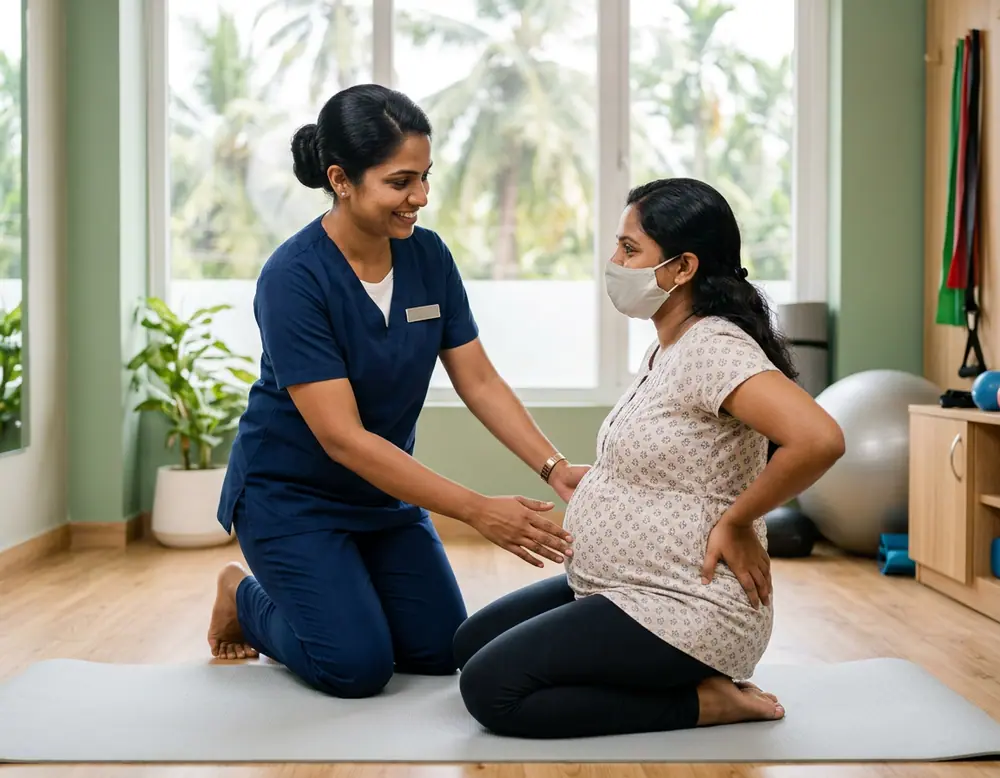
The core heals from the inside out. Gentle breathing and deep-core work come first, strength builds steadily from there.
Through our women's health physiotherapy, we start with breathing and deep-core activation, teach you how to engage the muscles that draw the separation back together, and then progress you gradually and safely towards fuller strength and everyday function. Our detailed guide to postpartum physiotherapy explains more about what a safe recovery looks like after birth.
Our Approach at Proud Physio
Private, thorough assessment
With a female physiotherapist, we measure the separation and check how your deep core and breathing are working, then set realistic goals with you.
Breathing & deep-core reconnection
We begin with gentle breathing and deep-core activation, teaching you to engage the muscles that support and draw the midline back together.
Safe, graded strengthening
As control improves, we progress your programme step by step, avoiding movements that strain the gap and adding strength your body is ready for.
Return to activity & daily life
We guide you safely back to lifting your baby, exercise and the activities you love, with a home routine to keep progress going.
What to Avoid and What Helps
| Best avoided early | Why | Safer focus instead |
|---|---|---|
| Crunches & sit-ups | Increase pressure and doming | Deep-core and breathing activation |
| Full planks | Strain the weakened midline | Modified, graded core holds |
| Heavy lifting & straining | Push the separation apart | Correct breathing and lifting technique |
| Twisting sit-ups | Overload the recovering core | Controlled, progressive strengthening |
Frequently Asked Questions
Will my diastasis recti heal on its own?
For many women the gap narrows in the months after birth. If it remains, or if your core still feels weak, guided physiotherapy usually helps it improve. A proper assessment tells us how much separation there is and what your recovery is likely to look like.
Will I be seen by a female physiotherapist?
Yes. Care is led by Dr. Noora Ameen TA (PT), a female physiotherapist, so your assessment and treatment take place in a private, comfortable and respectful setting. We know how personal this is and make sure you feel at ease throughout.
Is it too late if my baby is older?
No. While it is helpful to begin once you have recovered from birth, diastasis recti can respond to the right physiotherapy months and even years later. It is never too late to rebuild your core with a safe, structured programme.
Can I still exercise with diastasis recti?
Yes, but the type of exercise matters. Crunches, sit-ups and heavy straining can make doming worse, so we guide you towards safe movements first and progress you steadily. In time, most women return to the exercise they enjoy.
How long does recovery take?
Every recovery is different, but with consistent, guided rehabilitation many women see meaningful improvement over several weeks to a few months. We give you a realistic timeline after your assessment and adjust your programme as you progress.
Rebuild Your Core Safely and Confidently
Book a private diastasis recti assessment with Dr. Noora at our clinic, and start a gentle, personalised core rehabilitation programme.
Call +91 80894 14419 Visit the Clinic