



Few things reveal a knee problem quite like a flight of stairs. Many people feel fine walking on the flat, then notice a sharp or aching pain the moment they head up or, more tellingly, down the steps. If that sounds familiar, your knee is trying to tell you something useful, and in most cases it points to a cause that physiotherapy handles very well.
This guide, written by our physiotherapy team, explains why stairs are so demanding on the knee, what the pain usually means, and how to get moving comfortably again.
Why Stairs Are So Hard on the Knee
Stairs place a large load through the front of the knee, where the kneecap glides in a groove at the end of the thigh bone. Going down is especially demanding, because your thigh muscles have to work hard while lengthening to control your body weight against gravity, step after step. If the kneecap is not tracking smoothly, or the muscles controlling the knee are weak, that repeated load is where pain shows up first.
What Knee Pain on the Stairs Usually Means
Stair pain is a classic clue, and it most often points to one of these causes.
Patellofemoral pain
Also called kneecap tracking pain, this is the most common reason for stair pain. The kneecap does not glide smoothly in its groove, irritating the surfaces behind it, especially on descent.
Early osteoarthritis
Gentle, age-related wear of the knee joint can cause aching and stiffness on stairs long before it troubles you on the flat. It is common and very manageable with the right plan.
Weak quadriceps
The thigh muscles that straighten and control the knee are your natural shock absorbers. When they are weak, more load passes straight through the kneecap and joint.
Weak hip and glute muscles
If the muscles around the hip cannot keep the thigh steady, the knee tends to roll inward on each step, throwing the kneecap off track and driving pain.
Knee pain on the stairs is rarely a sign your knee is wearing out. Far more often, it is a sign the muscles around it need waking up.
When to Seek Help
Most stair pain is mechanical and safe to work on, but some symptoms deserve a proper assessment sooner rather than later. See a professional if you notice:
- The knee locking or catching so you cannot fully straighten it
- A sense of the knee giving way or buckling under you
- Significant or recurring swelling around the joint
- Pain following a twist, fall or sporting injury
- Pain that is severe, keeps worsening, or disturbs your sleep
These do not always mean something serious, but they are worth checking so the right treatment starts early.
How Physiotherapy Helps
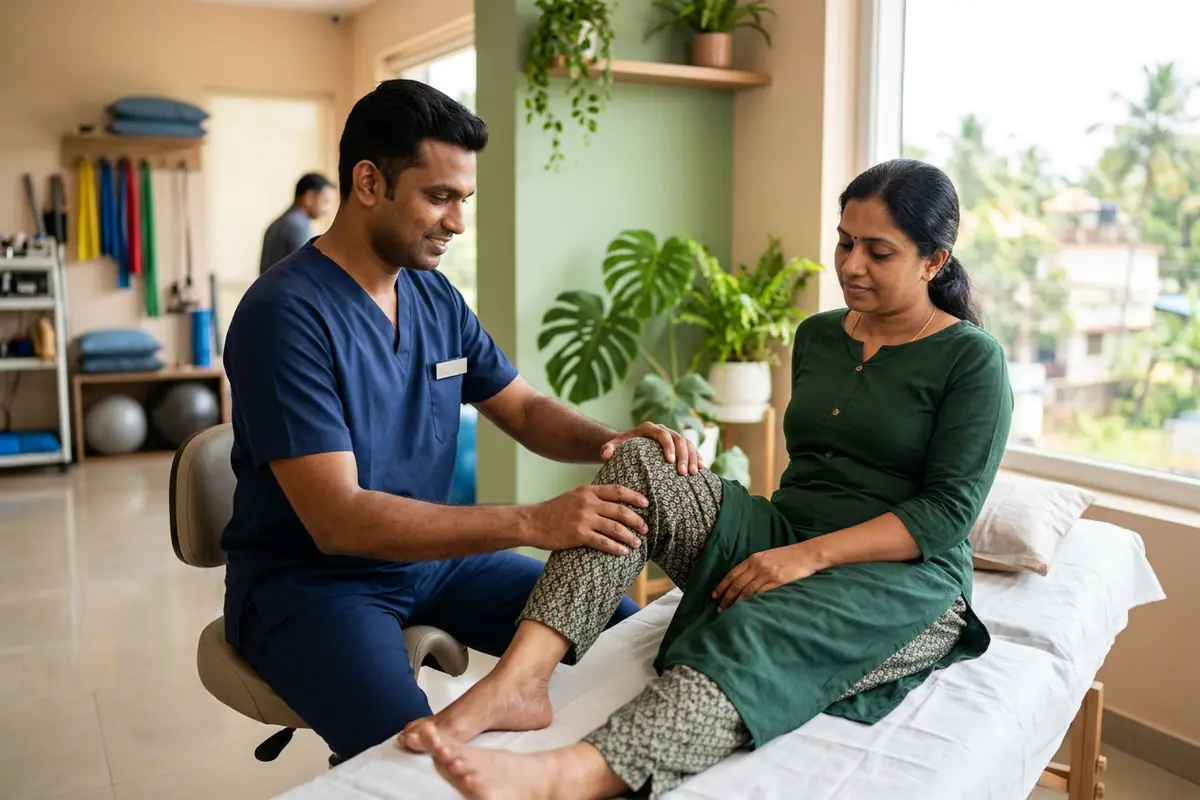
At our Kakkanad clinic we assess how your kneecap moves, test the strength of your thigh, hip and glute muscles, and watch how you control the knee on stairs and squats. From there we build a targeted plan. Strengthening the quadriceps, hips and glutes gives the knee the support it has been missing, while movement retraining teaches the joint to load evenly so the kneecap tracks smoothly. Hands-on treatment can ease pain along the way. Most people climb stairs far more comfortably within a few weeks. Learn more on our knee pain page and about our musculoskeletal and sports physiotherapy service.
Frequently Asked Questions
Why do stairs hurt more than walking on the flat?
Stairs load the front of the knee and the kneecap far more than flat walking, especially going down when the thigh muscles must control your body weight against gravity. If the kneecap is not tracking well or the muscles are weak, this is where pain appears first.
Does knee pain on stairs mean I have arthritis?
Not necessarily. While early osteoarthritis can cause stair pain, the most common cause is patellofemoral pain from kneecap tracking, often linked to weak thigh and hip muscles. A physiotherapy assessment can tell the difference and guide the right plan.
Will strengthening really help my knee on stairs?
For most people, yes. Building strength in the quadriceps, hips and glutes gives the knee better support and control, so the kneecap tracks more smoothly and less load passes through the joint. This is one of the most effective treatments for stair pain.
When should I see a physiotherapist about knee pain?
See someone promptly if your knee locks, gives way or swells, or if pain follows a twist or fall. Otherwise, if stair pain lasts more than a couple of weeks or keeps returning, an assessment is well worth it to fix the cause early.
Take the Stairs Without the Wince
Book a knee assessment with Dr. Noora at Proud Physio & Wellness. Open every day, evening slots available.
Call +91 80894 14419 Book Online