





You swing your legs out of bed, put your feet on the floor, and a sharp pain shoots through the bottom of your heel. After a few careful steps it eases, only to return after you have been sitting for a while. If this sounds familiar, you are almost certainly dealing with plantar fasciitis, the single most common cause of heel pain we see at our clinic.
The reassuring news is that it is very treatable and rarely needs anything invasive. With the right stretching, footwear and load changes, most heels settle steadily. This guide, written by our physiotherapy team, explains why the pain behaves the way it does and exactly what helps.
Why It Hurts Most in the Morning
The plantar fascia is a thick band of tissue that runs along the sole of your foot, from the heel bone to the toes, supporting your arch. When you are asleep or sitting still, the foot rests in a relaxed, pointed position and the fascia tightens up. The moment you stand and take weight, that tightened band is suddenly stretched, and the irritated tissue near the heel protests sharply.
This is exactly why the hallmark of plantar fasciitis is pain that is worst with the first steps in the morning, or after any long period of rest such as a desk shift or a long drive through Kochi traffic. It is also why night splints help: by holding the foot in a gently stretched position overnight, they stop the fascia tightening while you sleep.
Common Signs You Might Notice
The pattern tells the story: heel pain that bites first thing and after rest, then eases with gentle movement, points strongly to the plantar fascia.
What Actually Helps: First-Line Care
Reassuringly, the first-line management of plantar fasciitis is conservative, and it works for most people. It centres on a few consistent habits rather than any single quick fix.
- Stretching of the plantar fascia itself, along with the calf and Achilles, to reduce the tightness that drives the morning pain.
- Activity and load modification, easing off the high-impact running or long standing that flared it, then rebuilding gradually.
- Supportive, cushioned footwear with good arch support, or orthoses where needed, to share the load off the heel.
- Avoiding barefoot walking on hard floors, which is a common aggravator on tiled Kerala homes.
- Night splints to keep the fascia gently stretched overnight and soften that first-step pain.
Red Flags Worth a Proper Look
Most heel pain is straightforward, but a few features deserve a professional assessment rather than more self-management: heel pain following a specific injury or fall, numbness or pins and needles spreading into the foot, pain that is severe and unrelenting even at rest, swelling, redness or warmth suggesting infection, or heel pain in a child. If any of these apply, get it checked promptly.
How Physiotherapy Settles Heel Pain
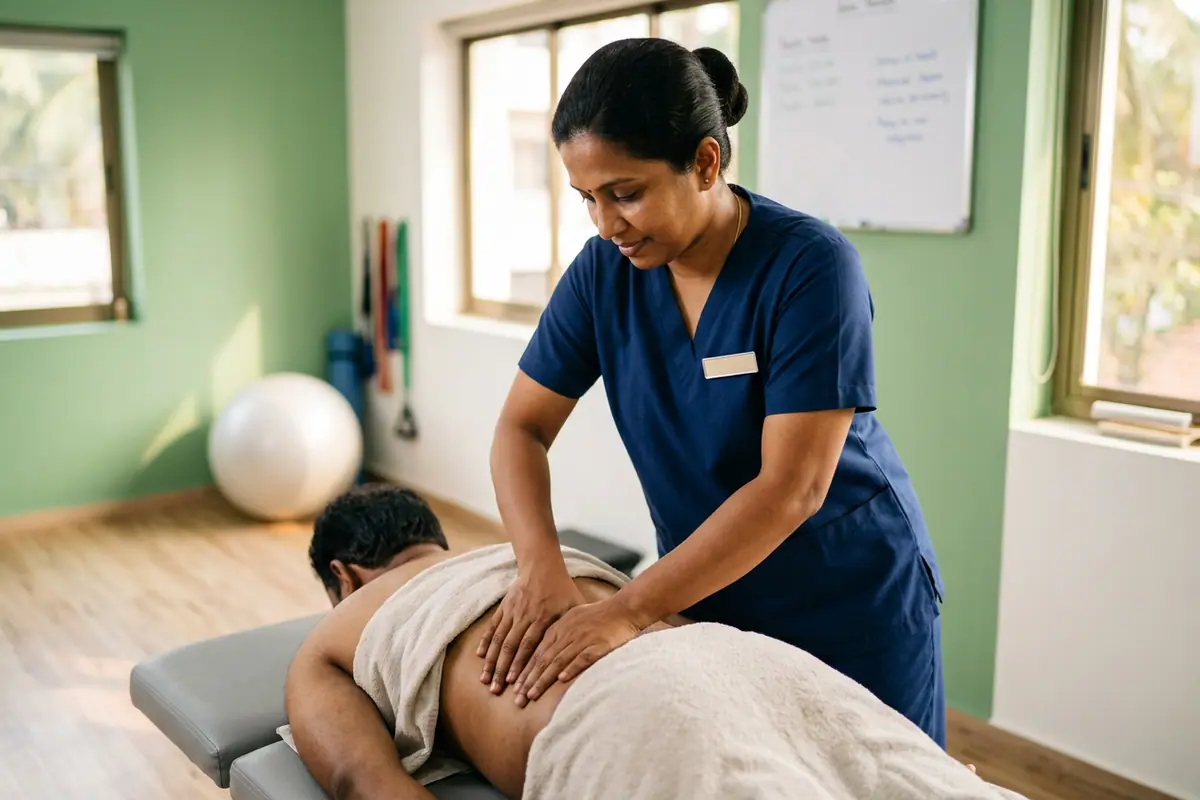
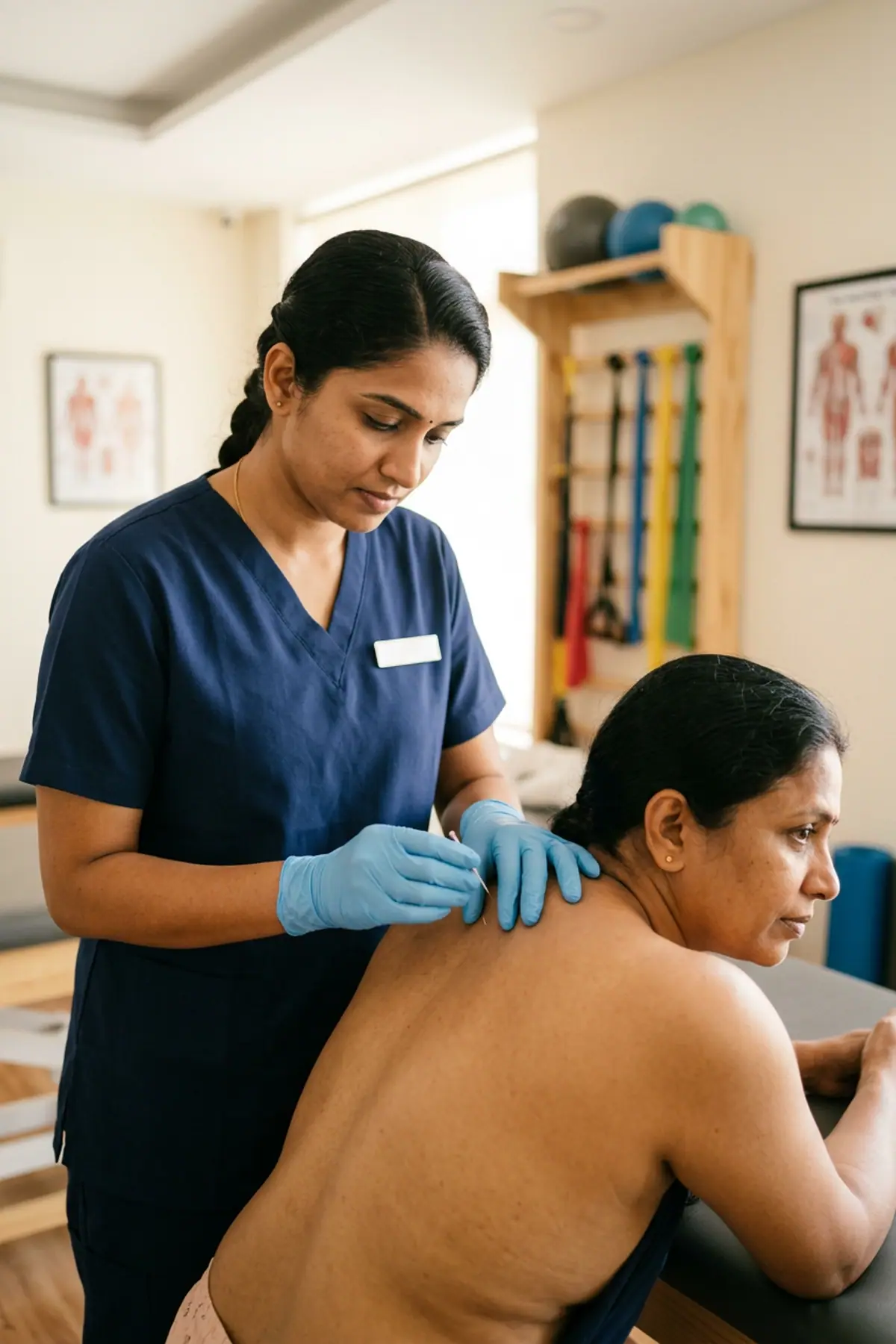
A physiotherapist first confirms that the plantar fascia truly is the source, since heel pain can occasionally come from the nerve, the fat pad or the heel bone. From there, our musculoskeletal and sports physiotherapy team builds a tailored plan: hands-on release of the tight calf and fascia, a graded stretching and strengthening programme, footwear and orthotic advice, and a sensible return-to-activity plan so it does not simply flare again.
| Habit | Do this | Avoid this |
|---|---|---|
| First steps | Stretch the calf and sole before standing | Jumping straight onto a hard floor |
| Footwear | Cushioned shoes with arch support | Flat, worn-out slippers indoors |
| Activity | Reduce impact, rebuild gradually | Pushing through sharp pain |
| At night | Consider a night splint | Letting the foot fully point all night |
When to Seek Help in Kochi
If your heel pain has lasted more than a few weeks, keeps returning each morning, or is starting to limit your walking, early physiotherapy is the faster route back to comfort. Our clinic in Kakkanad is open every day from 8:00 AM to 10:00 PM, so a session fits around work.
Frequently Asked Questions
Why does my heel hurt most in the morning?
Because the plantar fascia tightens while you rest overnight. When you stand and take your first steps, that tightened band is suddenly stretched, which irritates the tissue near the heel and causes the sharp first-step pain. It typically eases as you move and warm up.
Do I need an injection or surgery for plantar fasciitis?
Usually not. First-line care is conservative: stretching, supportive footwear, load modification and sometimes night splints. Injections and shockwave therapy are later-line options considered only if conservative measures have not helped after a fair trial.
Can I keep walking and exercising?
Gentle movement is fine and often helps, but heavy impact such as running or long standing should be eased back while the heel calms, then rebuilt gradually. A physiotherapist can guide a safe return so the pain does not flare again.
How long does plantar fasciitis take to settle?
It varies with how long it has been present, but many heels improve steadily over several weeks with consistent stretching, footwear changes and load management. After an assessment we give you a clear, realistic plan for your foot.
Take the Sting Out of Your First Steps
Book a heel and foot assessment with Dr. Noora at Proud Physio & Wellness. Clear diagnosis, targeted treatment, no unnecessary injections.
Call +91 80894 14419 Book Online