





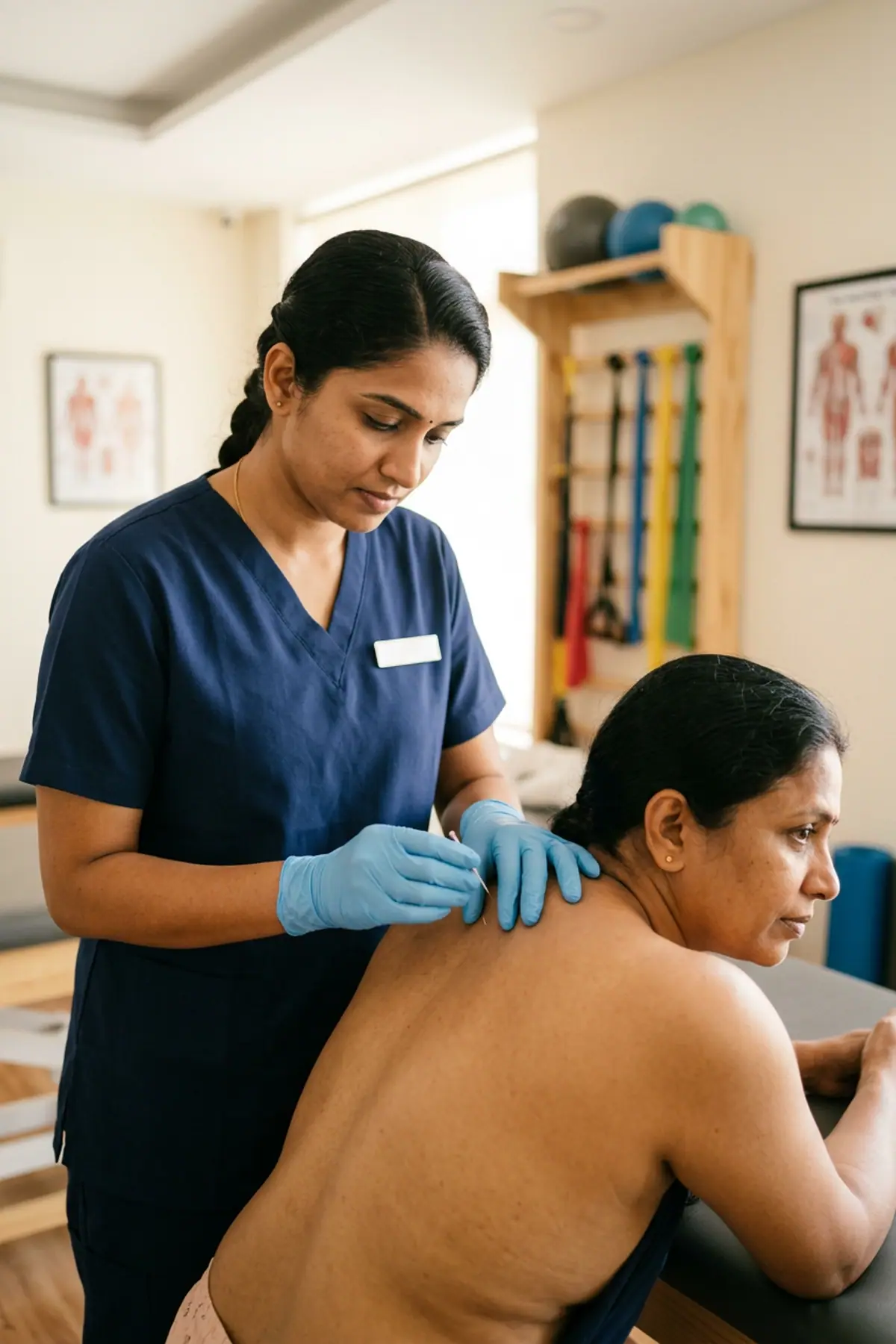

Look around any office in Infopark or a study desk in Kakkanad and you will see the same shape repeated again and again: the head pushed forward, the shoulders curled in, the upper back rounded over a glowing screen. Hours become years, and the body quietly adapts to the position it is held in most. What starts as a harmless slouch slowly hardens into stiff joints, tight muscles and a nagging ache across the neck and shoulders that no amount of stretching at your desk seems to shift.
Posture correction at Proud Physio & Wellness tackles this at its root. Led personally by Dr. Noora Ameen TA (PT), our programmes do not just remind you to sit up straight. We assess exactly where your posture has drifted, retrain the muscles that hold you there, and build the habits and workspace setup that keep the improvement in place. The goal is a posture that feels natural, not one you have to constantly force.
Signs Your Posture Needs Attention
Poor posture rarely announces itself with a single dramatic symptom. It builds up gradually, and most people only seek help once the discomfort becomes hard to ignore. These are the patterns we see most often at the clinic:
These signs are connected. Forward head posture pulls the upper back into a hunch, the hunch drags the shoulders forward, and the whole chain leaves the deep neck and mid-back muscles weak and overstretched while the chest and upper trapezius stay permanently tight. Correcting posture means addressing this pattern as a whole, not chasing one sore spot at a time.
Why Tech Neck Is So Common in Kochi
Kakkanad sits at the heart of Kerala's IT corridor, and with that comes a particular set of postural problems. Long days bent over laptops, monitors placed too low and endless scrolling on phones all pull the head forward and round the upper back. The human head weighs around five kilograms, but every inch it drifts forward multiplies the strain on the neck. Hold that position eight hours a day, five days a week, and the muscles simply adapt to it, leaving you stiff, tired and sore long before the day is done.
Your body does not wear out from posture. It adapts to it. Change the position it lives in, and it adapts right back.
It is not only IT professionals. Students develop text neck early from books and phones, new mothers spend long hours looking down while feeding and carrying their baby, and older adults gradually roll forward as the spine stiffens with age. Each group needs a slightly different approach, but the principle is the same: reduce the strain, restore the balance between muscle groups, and retrain the body to hold itself well.
What Posture Correction Involves
Good posture is not about standing rigidly to attention. It is about balance, mobility and strength working together so a neutral spine feels natural. Here is how a typical programme unfolds:
Detailed postural assessment
We photograph and measure your standing and seated posture, check the mobility of your neck, mid-back and shoulders, and identify exactly which muscles are tight, which are weak, and where the strain is concentrating.
Targeted strengthening and stretching
Your programme pairs specific strengthening for the deep neck flexors, mid-back and shoulder-blade muscles with gentle release and stretching for the tight chest and upper trapezius, rebalancing the whole system rather than a single area.
Ergonomic advice for your workspace
We help you set up your desk, chair, monitor and phone habits so that good posture becomes the path of least resistance during your working day, not a constant effort.
Habit retraining and taping
We teach simple postural cues and movement breaks that fit into a busy schedule, and where useful we apply postural taping to gently remind the body of its improved position while the new habit takes hold.
Posture, Ergonomics and Desk-Related Pain
Correcting posture in the clinic only lasts if your daily environment supports it. That is why our posture work sits closely alongside our ergonomic and lifestyle guidance, which looks at your whole routine, from screen height and chair support to how often you move. If back pain from long desk hours is your main concern, our guide on back pain in desk workers explains many of the changes we recommend every week.
For deep, stubborn tightness across the shoulders and upper back, we sometimes combine posture correction with myofascial release therapy to free up restricted tissue before retraining the muscles.
A Typical Programme at a Glance
| Stage | Focus | What to expect |
|---|---|---|
| Weeks 1-2 | Assessment & relief | Full postural evaluation, pain relief, first mobility and awareness exercises |
| Weeks 3-5 | Rebalancing | Strengthening weak muscles, releasing tight ones, ergonomic setup at work |
| Weeks 6-8 | Retraining | Habit cues, postural taping, movement breaks built into your routine |
| Ongoing | Maintenance | Simple home routine and periodic reviews to protect your progress |
Why Kochi Chooses Proud Physio for Posture
- Certified physiotherapist: care is led personally by Dr. Noora, with real experience treating desk-related posture problems.
- Rooted in assessment: every plan starts with measuring your actual posture, not guesswork, so you can see the change over time.
- Practical ergonomics: advice tailored to real Infopark workstations and home setups, not generic tips.
- Flexible timing: open every day from 8:00 AM to 10:00 PM, so sessions fit around demanding work schedules.
- Lasting results: we focus on habits and strength, so good posture stays with you long after the programme ends.
Frequently Asked Questions
Can posture really be corrected once it has become a habit?
Yes. Posture is largely a matter of muscle balance and habit, both of which respond well to training at any age. With targeted strengthening, stretching and habit retraining, most people see a clear, lasting change within six to ten weeks.
I work long hours at Infopark. How much time will this take?
Sessions are short and focused, and the home exercises are designed to fit around a busy work schedule. Much of the improvement comes from small ergonomic changes and brief movement breaks that slot into your working day rather than adding to it.
Will fixing my posture help my neck and back pain?
Very often, yes. Forward head posture and rounded shoulders are common drivers of chronic neck, shoulder and upper back pain. By rebalancing the muscles and reducing the daily strain, posture correction addresses one of the root causes rather than just the symptoms.
Do you help new mothers and students, not just office workers?
Absolutely. New mothers develop strain from long hours of feeding and carrying, and students often develop text neck early from books and phones. We tailor the assessment and programme to each person's daily routine and needs.
What is postural taping and does it hurt?
Postural taping uses gentle, flexible tape applied across the shoulders and upper back to softly remind the body of its improved position. It is painless, worn over a few days at a time, and used only as a support while the new habit and strength develop.
Stand Taller and Feel the Difference
Book a posture assessment with Dr. Noora at our clinic, minutes from Infopark, and start correcting tech neck and rounded shoulders today.
Call +91 80894 14419 Visit the Clinic