
When a muscle is tight or a joint is sore, the right kind of gentle, targeted support can make a genuine difference to how quickly and comfortably you recover. At Proud Physio & Wellness we use two complementary techniques, therapeutic taping and cupping therapy, to reduce pain, release tension and keep you moving safely while the underlying tissue heals. Both are drug-free, non-invasive and, in the hands of a trained physiotherapist, remarkably effective at getting stubborn muscles and joints to settle.
These treatments are never used in isolation. Led personally by Dr. Noora Ameen TA (PT), taping and cupping form part of a wider plan built around your assessment, your goals and the exercises that will keep the problem from returning. They are tools that make the real work of rehabilitation easier, not shortcuts that replace it.
Conditions We Help With
Taping and cupping suit a wide range of muscle and joint complaints, from fresh sports injuries to the deep, nagging tightness that builds up over months at a desk. We regularly use these techniques for:
Because these two methods do different jobs, we often combine them. Cupping releases the tight, restricted tissue first, then taping supports the area and guides better movement as you return to activity. Which technique leads depends entirely on what your assessment shows.
Therapeutic and Kinesiology Taping
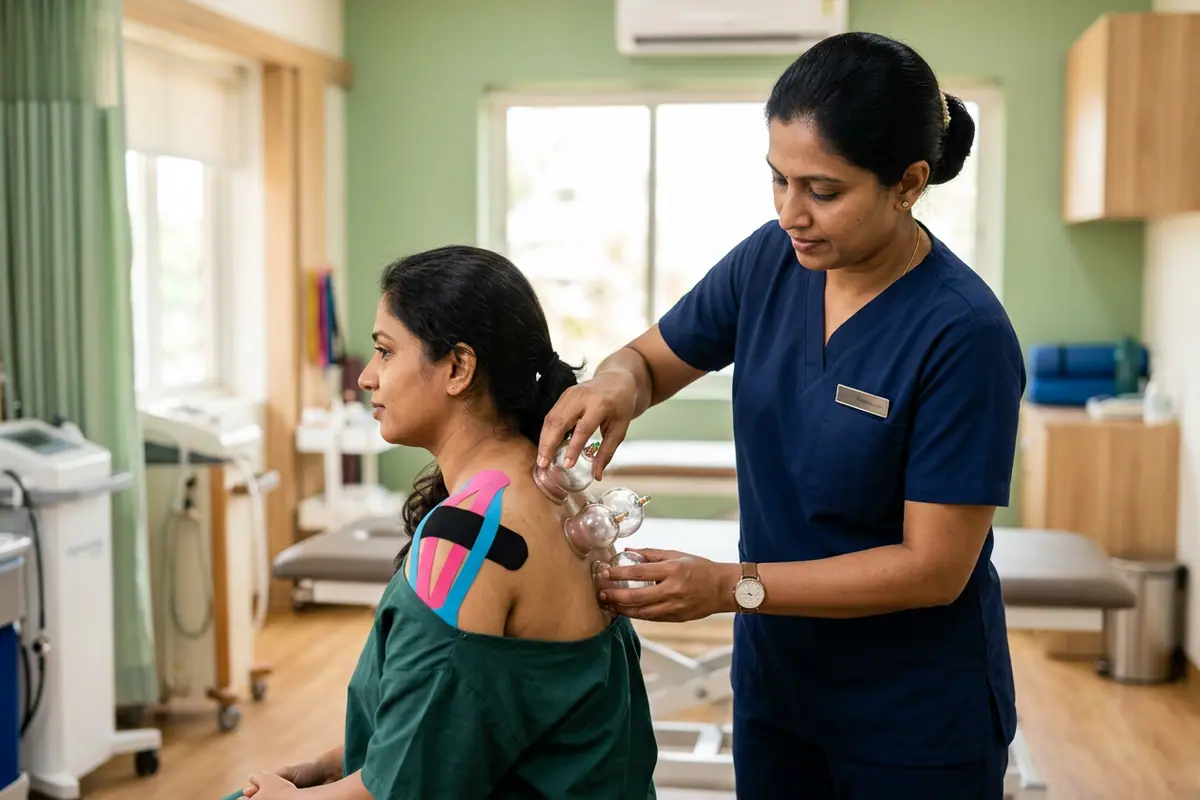
Kinesiology taping uses a thin, stretchy, skin-friendly tape applied along muscles and around joints in specific patterns. Unlike the rigid strapping used to lock a joint completely still, this tape moves with you. It gently lifts the skin to ease pressure on the tissue beneath, which helps reduce swelling, calm pain and improve the flow of fluid away from a swollen area. Applied well, it offers steady support to an injured joint or muscle without taking away the movement you need to heal.
Athletes across Kochi use taping to keep training safely through a niggle, while desk workers find it a helpful cue for better posture. The tape can stay on for several days, including through showers, giving continuous, low-key support between sessions.
Good taping does not stop you moving. It helps you move better, with less pain and more confidence while the injury settles.
Cupping Therapy and Myofascial Decompression
Cupping therapy, sometimes called myofascial decompression, works in the opposite direction to hands-on massage. Instead of pressing down into the muscle, soft cups create a gentle suction that lifts the skin and the fascia beneath it. This decompression eases tight, restricted tissue, encourages fresh blood flow into the area and helps release the stubborn knots that ordinary stretching cannot reach.
Patients often describe the sensation as a firm, pulling tightness rather than pain, and many feel looser and lighter almost immediately. The cups may be left in place or glided across the skin with a little oil to treat a broader area such as the upper back or calves.
What to Expect in a Session
Every session begins with understanding the problem, not simply applying a technique. Here is how a typical visit unfolds:
Assessment
We examine the injured or tight area, check your movement and strength, and identify exactly which muscles and joints need support or release before choosing the right technique.
Cupping to release
Where tissue is tight or restricted, we apply cups to decompress the muscle and fascia, improve blood flow and ease deep tension that hands alone struggle to reach.
Taping to support
We then apply kinesiology or therapeutic tape to support the joint or muscle, reduce swelling and guide safer, more comfortable movement as you return to activity.
Movement and home advice
We pair the treatment with targeted exercises and simple guidance so your gains hold, and we explain how long to keep tape on and what marks to expect.
Are Taping and Cupping Safe?
In the hands of a trained physiotherapist, both techniques are very safe and well tolerated. The tape is gentle on the skin and easy to remove, and cupping suction is carefully controlled and adjusted to your comfort. We always screen first, because certain conditions such as fragile or broken skin, some circulation problems or a tendency to bruise easily mean one approach may be adjusted or avoided. This careful, individual assessment is exactly why these treatments are best delivered by a physiotherapist rather than attempted at home.
Taping vs Cupping at a Glance
| Aspect | Therapeutic Taping | Cupping Therapy |
|---|---|---|
| Main goal | Support & guide movement | Release tight muscle & fascia |
| How it feels | Light support on the skin | Firm pulling tightness |
| Best for | Joints, swelling, posture | Knots, stiffness, blood flow |
| After-effects | None, tape simply peels off | Temporary round marks that fade |
| Lasts | Several days on the skin | Minutes per area, per session |
Why Patients in Kochi Choose Proud Physio
- Techniques within a full plan: taping and cupping support a complete musculoskeletal and sports physiotherapy programme, not a standalone quick fix.
- Trained, certified physiotherapist: every application is performed personally by Dr. Noora, with careful screening first.
- Clear explanation: we tell you what each technique does, how it will feel and what marks to expect, so there are no surprises.
- Flexible timing: open every day from 8:00 AM to 10:00 PM, so sessions fit around work and training.
- Sports-friendly: ideal for keeping active people moving safely through recovery.
Frequently Asked Questions
Do the cupping marks mean I have been injured?
No. The round marks are not bruises from impact and are not a sign of harm. They reflect improved blood flow to the surface and are painless, usually fading within three to seven days.
Does cupping therapy hurt?
Most people feel a firm pulling or tightness rather than pain. The suction is carefully controlled and adjusted to your comfort, and many patients feel looser and more relaxed straight afterwards.
How long can I keep kinesiology tape on?
Therapeutic tape can usually stay on for several days, including through showers. We will advise you exactly how long to keep it on based on your injury and how your skin responds.
Can I exercise or play sport with tape on?
Yes, in most cases. Kinesiology tape is designed to support you during movement, which is why athletes use it. We will guide you on what activity is safe as you recover.
Are taping and cupping enough on their own?
They work best as part of a wider physiotherapy plan. We combine them with targeted exercises and advice so the underlying cause is addressed and the problem is less likely to return.
Support Injured Muscles and Move with Confidence
Book a taping and cupping session with Dr. Noora at our clinic, or arrange care at your convenience.
Call +91 80894 14419 Visit the Clinic