
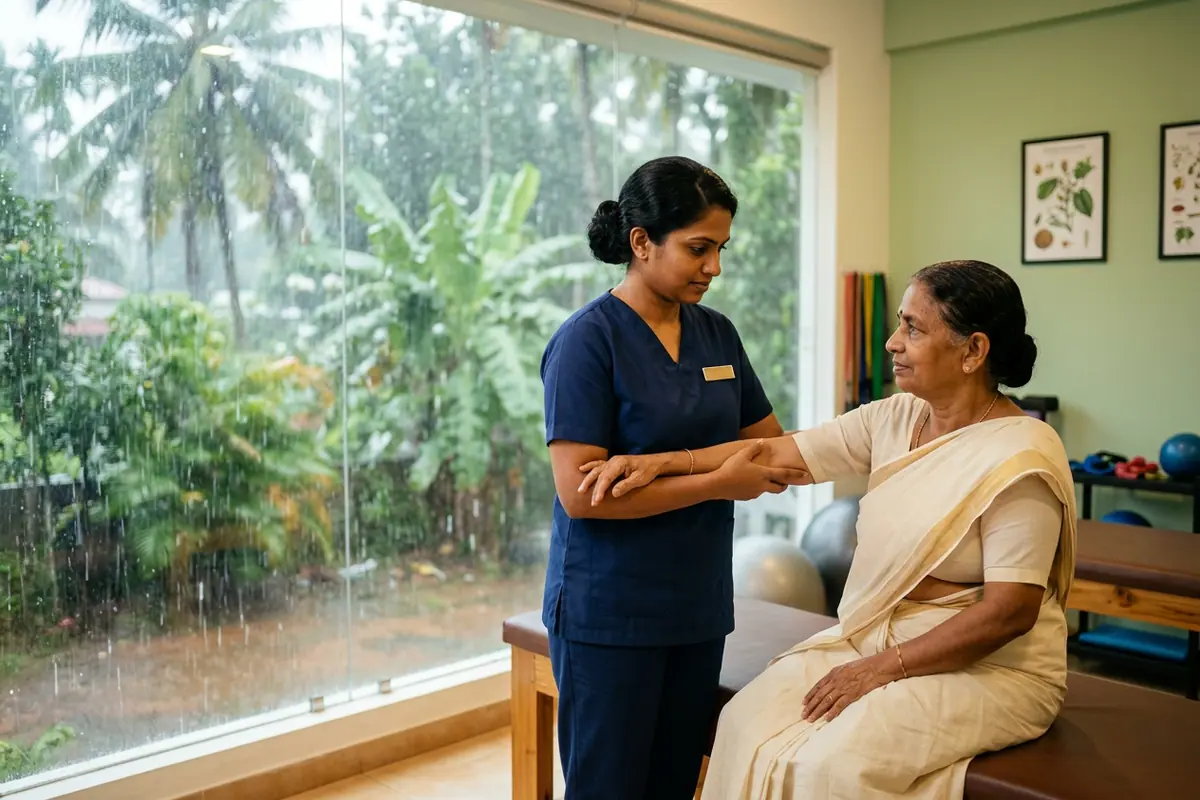
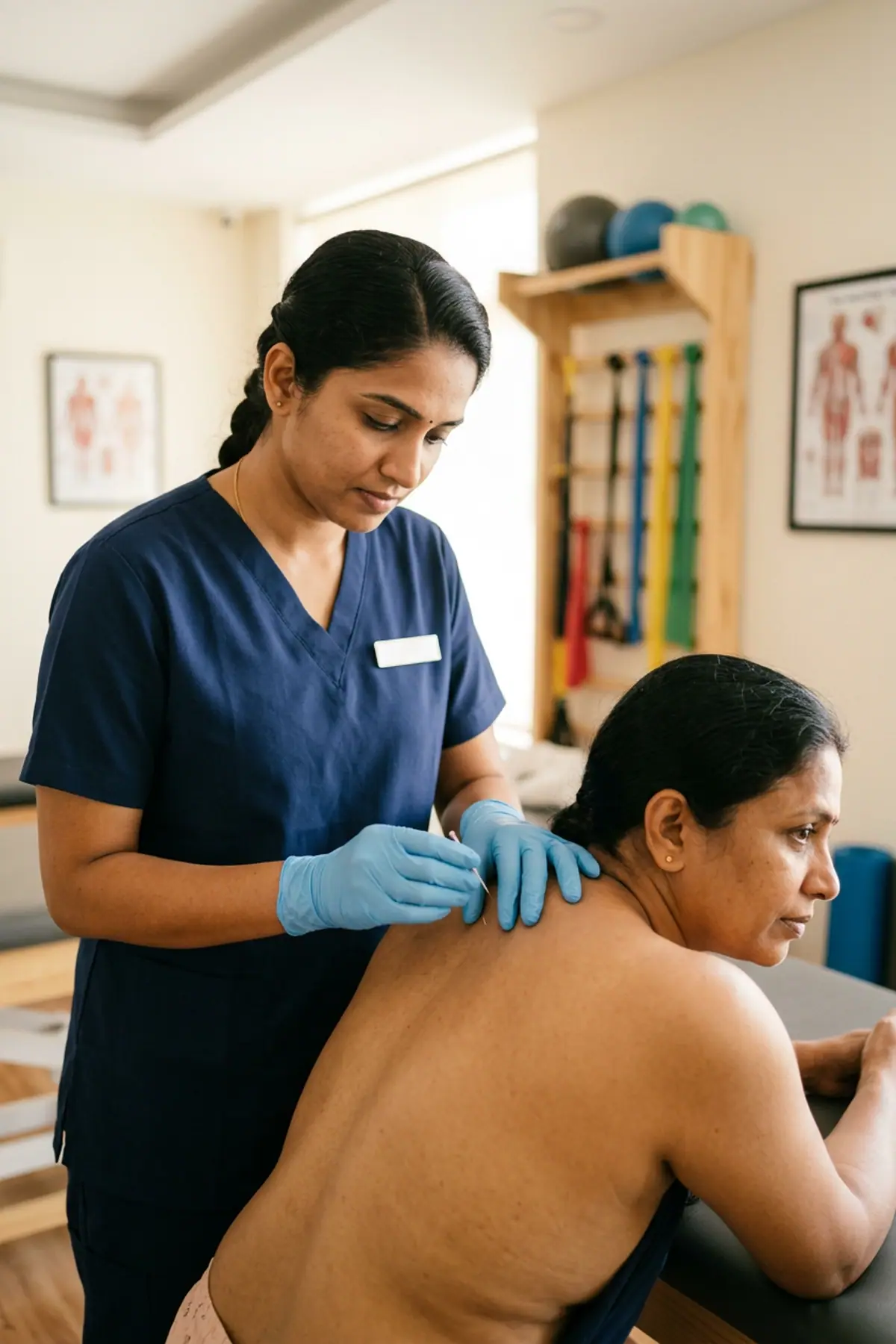
Some muscle pain simply refuses to shift. You stretch, you rest, you massage the area, and yet a deep, tender knot stays locked in the muscle, aching and restricting how freely you can move. These knots, known as myofascial trigger points, are a common source of persistent neck, back and limb pain, and they often sit deeper than hands or stretching can reach. Dry needling is a precise physiotherapy technique designed to release exactly these points.
At Proud Physio & Wellness, dry needling is performed personally by Dr. Noora Ameen TA (PT) as part of a wider treatment plan. Using fine, sterile, single-use needles, we target the tight band within the muscle to release the knot, reduce pain and restore normal movement. It is not a standalone cure but a powerful tool that, combined with the right exercises, helps break long-standing cycles of pain.
Conditions We Help With
Dry needling is most useful where tight muscles and active trigger points are driving pain or limiting movement. We commonly use it for:
Because trigger points often develop as a result of another problem, such as poor posture, an old injury or muscle overload, we always look for the underlying cause too. Releasing the knot brings relief, but correcting what created it is what keeps the pain from coming back.
Dry Needling Is Not Acupuncture
This is the question we hear most, and the distinction matters. Although both use fine needles, dry needling and acupuncture come from completely different traditions. Acupuncture is rooted in traditional Chinese medicine and works along energy meridians. Dry needling is a modern technique based on Western musculoskeletal assessment and anatomy. The needle is placed directly into a trigger point identified through a physical examination of your muscles, movement and pain pattern, with the specific aim of releasing that tight band of tissue.
Dry needling is not acupuncture. It is a Western, anatomy-based technique that targets the exact muscle knot causing your pain.
What Dry Needling Feels Like
The needles used are extremely fine, much thinner than the needles used to give injections, so insertion is often barely felt. When the needle reaches an active trigger point, you may feel a brief, deep ache or a quick muscle twitch. This is called a local twitch response, and it is a good sign: it tells us the tight band has been reached and is releasing. The sensation passes quickly, and many patients feel a noticeable loosening and relief soon afterwards. Some mild muscle soreness for a day or two is normal and settles on its own.
What to Expect in a Session
Dry needling is always guided by a careful assessment, never applied blindly. Here is how a typical session unfolds:
Assessment
We examine your muscles, movement and pain pattern to locate the exact trigger points responsible, and confirm dry needling is suitable and safe for you.
Needle insertion
Using fine, sterile, single-use needles, we insert them precisely into the trigger points to release the tight muscle band and reduce pain.
Release and response
You may feel a brief twitch or deep ache as the knot releases. Needles are usually in place only briefly before being removed and safely disposed of.
Exercise and follow-up
We combine needling with targeted stretching and strengthening so the muscle stays relaxed and the underlying cause is addressed for lasting relief.
Is Dry Needling Safe?
When performed by a trained physiotherapist, dry needling is a safe and well-tolerated treatment. We use only sterile, single-use needles that are disposed of immediately after each session, and every application follows a thorough assessment of your suitability. Minor side effects such as brief soreness or a small bruise are usually the extent of it. We screen carefully first, because some conditions, medications that thin the blood or a strong needle phobia may mean we adjust the approach or choose a different technique such as myofascial release therapy instead.
Dry Needling at a Glance
| Aspect | What to expect |
|---|---|
| Purpose | Release painful muscle trigger points |
| Needles | Fine, sterile, single-use, disposed of after |
| Sensation | Brief ache or twitch, then loosening |
| After-effects | Mild soreness for a day or two, settles on its own |
| Best paired with | Stretching and strengthening exercises |
Why Patients in Kochi Choose Proud Physio
- Trained, certified physiotherapist: dry needling is performed personally by Dr. Noora, never by an untrained hand.
- Assessment first: we find the true source of your pain before any needle is used.
- Part of a full plan: needling is combined with musculoskeletal and sports physiotherapy and exercise for lasting results.
- Strict hygiene: sterile, single-use needles for every session, with safe disposal.
- Flexible timing: open every day from 8:00 AM to 10:00 PM, so appointments fit your schedule.
Frequently Asked Questions
Is dry needling the same as acupuncture?
No. Although both use fine needles, dry needling is based on Western musculoskeletal assessment and targets specific muscle trigger points, while acupuncture follows traditional Chinese medicine and energy meridians.
Does dry needling hurt?
The needles are very fine, so insertion is often barely felt. You may notice a brief deep ache or a quick muscle twitch when a trigger point is reached, which passes quickly and is usually followed by relief.
Is dry needling safe?
Yes, when performed by a trained physiotherapist. We use only sterile, single-use needles, screen you carefully first, and any side effects are usually limited to brief soreness or a small bruise.
How many sessions will I need?
It varies with the problem. Some patients feel relief after one or two sessions, while long-standing pain may need a short course. After your assessment we will give you a clear, realistic plan.
Can I go back to normal activity afterwards?
Usually yes. Mild soreness for a day or two is normal. We advise gentle movement and the stretches we prescribe, and will guide you on when to return to sport or heavier activity.
Release Stubborn Muscle Pain for Good
Book a dry needling assessment with Dr. Noora at our clinic, or arrange care at your convenience.
Call +91 80894 14419 Visit the Clinic